
Private table, shared evening

Private Gatherings

Private gatherings at The Fortune Garden bring dinner, conversation and physical, face-to-face cards into one considered restaurant evening. The room can change pace naturally: guests settle around a shared table, return to conversation, then gather again for offline poker and in-person card evenings that feel social, tactile and hosted rather than formal.


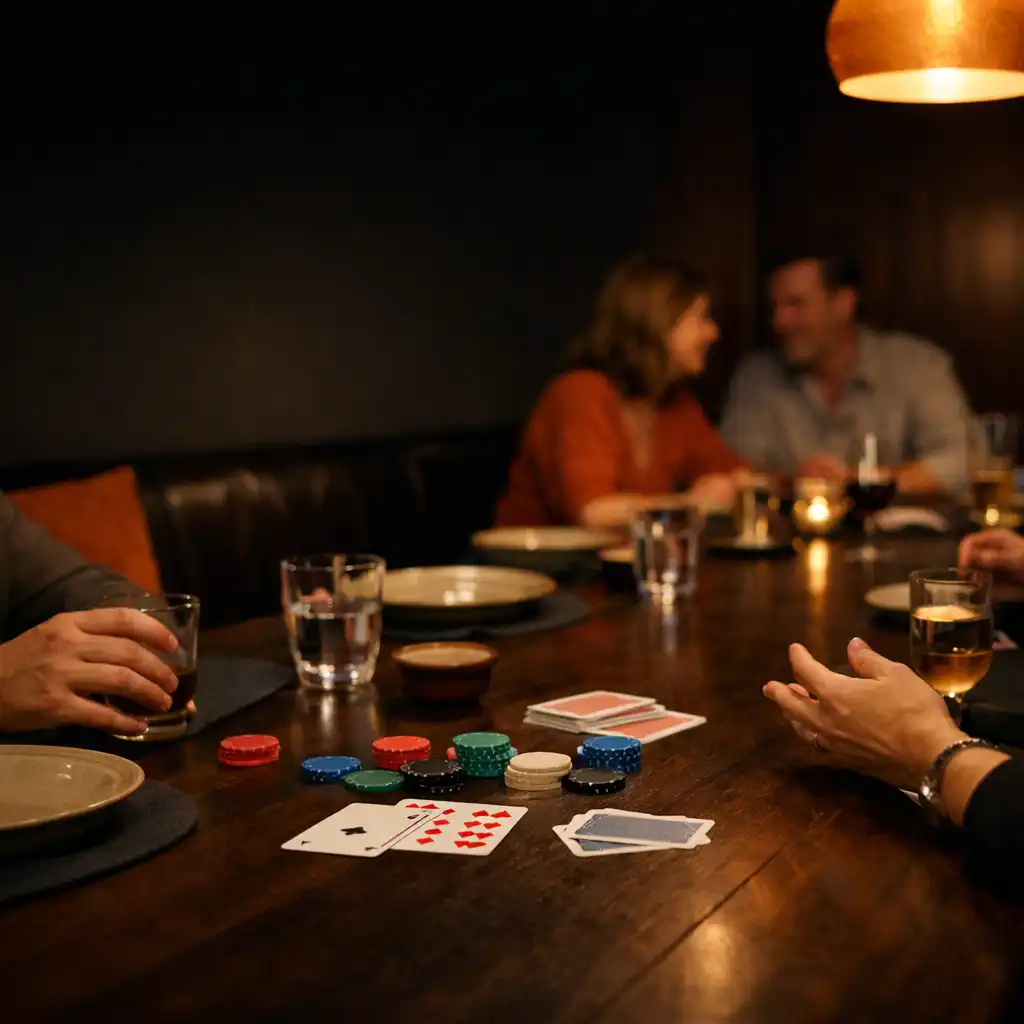
Hands, dining plates, glassware and physical cards gathered along a dark timber restaurant table.
A shared table where dining, conversation and cards can meet.
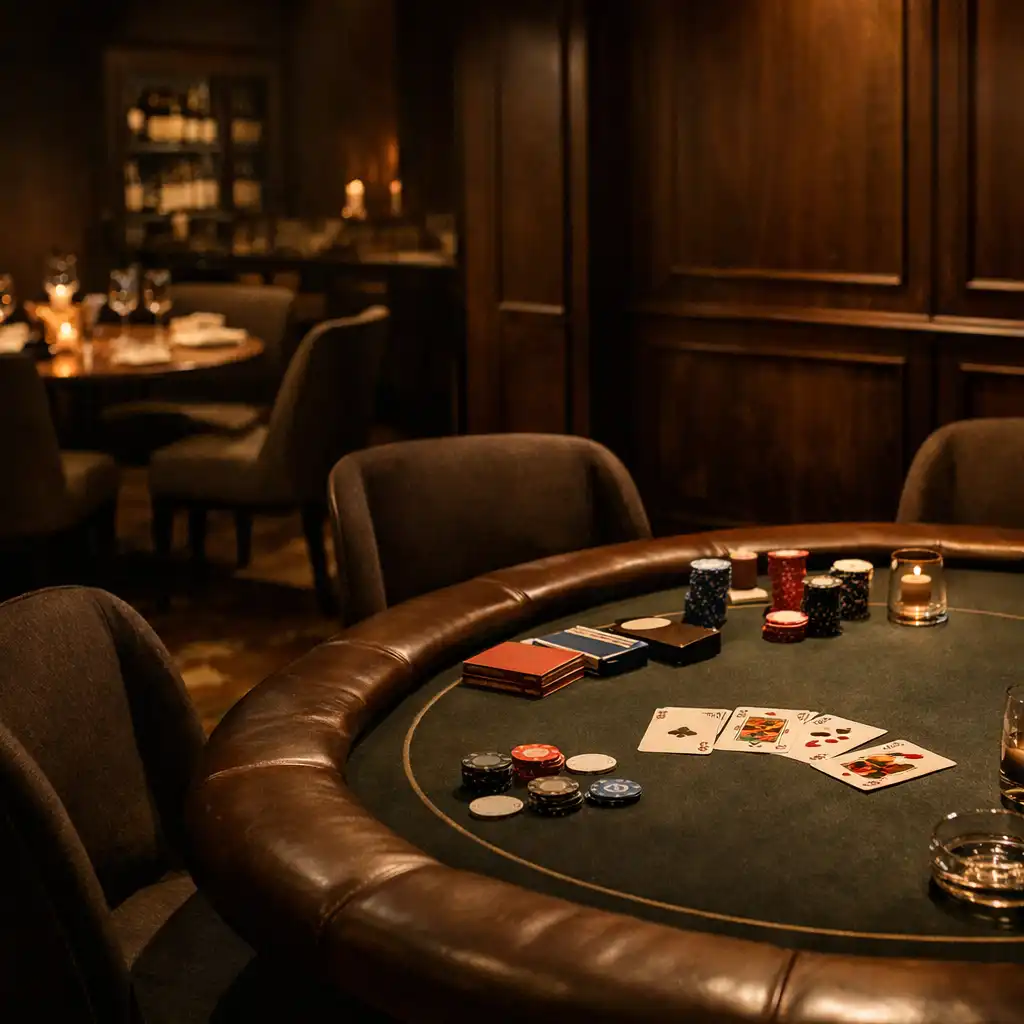
A warmly lit restaurant card room prepared with a felt table, chairs and nearby dining setting.
Prepared room details, held in low evening light.
01

The setting

A setting with room to arrive

A private gathering can begin with the restaurant atmosphere itself: an arrival, a shared table and time to settle into conversation. Timber, low light, glassware and generous table space create a composed backdrop before cards enter the rhythm. It is an in-person occasion with room for guests to find one another, rather than a sequence that has to begin all at once.

01

Card lounge

The card lounge can offer a sociable transition between dining and cards, keeping face-to-face conversation close to the centre of the evening. Rather than prescribing a fixed setup, it gives a group a shared place to gather, pause and reconnect. The pace can be shaped around the people at the table and the tone they want to keep.
02

Card room and tables

When guests are ready to gather around play, the card room and physical poker tables provide a tactile focal point. Cards in hand, felt beneath the deck and the visible presence of a table give conversation somewhere to return to. These spaces can be considered as part of the occasion without assuming every gathering follows the same room arrangement.

02

A shared direction

Choose the rhythm, then shape the table

A private gathering can be shaped around the social intention of the group rather than a one-size-fits-all schedule. Offline poker, restaurant dining and conversation can sit within one evening in different proportions. The directions below are simply useful ways to begin a planning conversation, keeping the table and the restaurant part of the same shared occasion.

A first outline can be simple: begin with the occasion, then consider the rhythm that feels most natural for the people invited.

01

Dinner-led

A dinner-led gathering places food, conversation and a relaxed introduction to physical cards at the centre. Cards may become a tactile social focus after dinner, or appear between moments of conversation, without taking over the room. It is a useful starting direction for groups who want the shared table to remain the evening’s main point of connection.

02

Card-led

A card-led gathering gives guests more time around poker tables, with hosted poker sessions helping to maintain a welcoming shared pace. The play remains face-to-face, physical and social, while the host can support table flow and guest comfort. It is a direction for groups that want cards to form a more visible part of the restaurant evening.

03

Conversation-led

A conversation-led gathering keeps cards as a recurring table ritual within an unhurried restaurant evening. Guests can move between dining, talk and play in a way that reflects the group, rather than a programme imposed on them. This direction suits in-person card evenings where the pleasure is in returning to the table together, again and again.

Hosted table time

A host keeps the table open

Hosted poker sessions provide a clear human centre for groups that want to enjoy physical, face-to-face cards without needing to perform expertise. A host can welcome guests, explain the table rhythm and help the atmosphere remain inclusive as people arrive and settle. The role is social facilitation: attentive to the group, present at the table and never louder than the conversation itself.

“A good table gives everyone a place to join in.”
01

Welcome the table

A host helps make introductions and establishes a comfortable pace, so arrivals can become a shared table rather than separate conversations. The focus stays on guest comfort and the in-person experience, leaving space for people to settle naturally into the room and one another’s company.

02

Keep it human

As cards enter the room, a host can guide attention toward tactile details: cards in hand, simple table etiquette and time to talk between rounds. Physical cards become part of the dining-room rhythm, supporting conversation rather than interrupting it with unnecessary instruction.

03

Let the evening breathe

The role is to support the evening’s flow, leaving the gathering feeling hosted rather than over-programmed. Offline poker is held as a shared table ritual in this setting, with enough guidance to make joining easy and enough space for the group’s own character to lead.

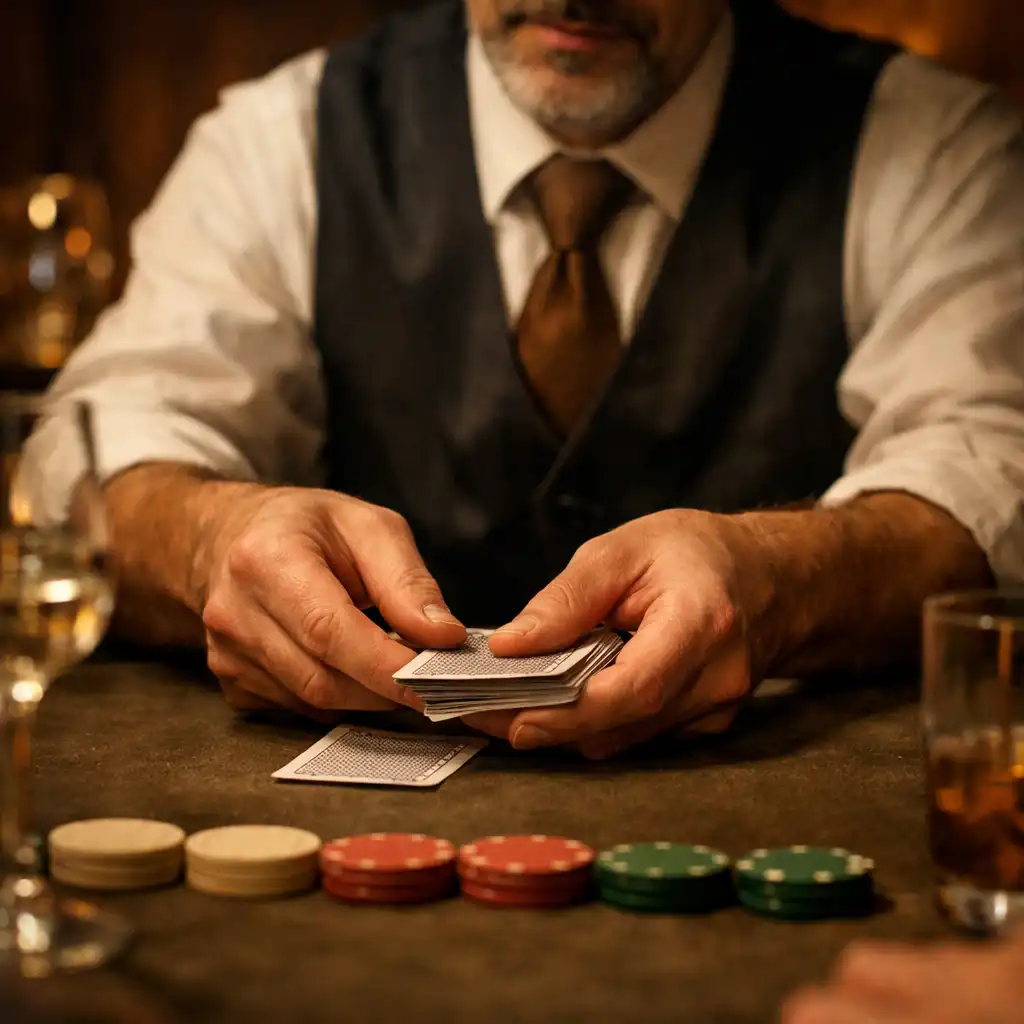
A host’s hands dealing physical cards across a softly lit felt table.
Hands, felt and a welcoming rhythm at the table.
03

One room, one occasion

Dinner gives the evening its first rhythm

Private gatherings can move between dinner, conversation and the tactile pause of cards without making any one element feel separate from the room. Dining gives the group a common beginning, while in-person cards create another reason to gather close. The result can feel considered and relaxed: a restaurant evening where the social energy of the table guides the transitions.

Host note: the group’s own conversation can set the tone; cards simply give it another focal point.

Before the cards

Time to arrive

Arrival creates time for guests to meet, settle and take in the dining-room atmosphere before attention gathers at a table. This early part of an in-person occasion allows conversation to form in its own way, without requiring the group to move immediately into a card-table moment.

Around the table

Dining as anchor

A shared meal anchors the occasion, allowing the group’s own conversation to set the tone for what follows. Restaurant dining remains a social centre rather than a prelude to something separate, giving people time together around the same table and room.

Into the card evening

A tactile focal point

When physical cards are introduced, poker tables become a focused but still conversational part of the same gathering. Offline poker stays face-to-face and non-financial in spirit: an opportunity to share attention, handle cards and return to the room’s wider conversation.

04

Planning orientation

From first idea to a shared table

A clear planning conversation can make a private evening feel considered long before guests reach the table. The stages below are an orientation to that conversation, not a fixed schedule or itinerary. They help an organiser put language around an in-person occasion and identify what matters most before sharing a first outline.

01

Begin with the gathering

Start with the occasion: the people gathering, the tone they want and whether the evening leans toward dining, cards or a balance of both. This gives the conversation a social centre before any detail needs to be resolved.

02

Consider the setting

Consider the room’s social rhythm, including how guests may arrive, meet and move between the card lounge, dining table or card room. The focus is on atmosphere and conversation, not on a predetermined layout.

03

Shape the table moment

Decide how prominently physical poker tables should sit within the evening, and whether hosted poker sessions feel right for the group’s confidence and mood. The aim is welcoming, face-to-face table time that suits the people invited.

04

Continue the conversation

Use the enquiry to share the outline, then continue the conversation around a private gathering that feels right for the people invited to an in-person card evening.

Go to the enquiry form
05

A simple outline

What to have in mind

A useful enquiry begins with a few simple details about the occasion, without needing every answer decided in advance. An initial outline can be brief and still give a planning conversation somewhere to begin. Think of these prompts as conversation starters for a private gathering, not an exhaustive checklist or a set of requirements.

01

The occasion

Name the reason for gathering and the atmosphere you would like guests to feel when they enter the room. A celebration, reunion, team moment or hosted social evening can each begin with a different tone; the important part is the feeling you want to bring people together around.

02

The emphasis

Share whether dining, a card lounge moment, poker tables or a blend of these feels most important to the group. This is only an early preference, not a commitment, and it helps describe how physical, face-to-face card time might sit within the evening.

03

The table mood

Mention whether guests would welcome hosted poker sessions or prefer cards to remain a lighter part of an in-person card evening. Different familiarity with cards is welcome in the conversation; the useful detail is how open, guided or informal the group would like the table to feel.

Private gathering enquiry

Start with the gathering you have in mind

Bring a simple outline rather than a completed plan. Tell us what kind of private gathering you are considering, what you hope guests will share around the table, and whether dining, face-to-face offline poker or hosted card time is part of the idea. The enquiry is a starting point for a considered conversation, not a confirmation of availability.

Submitted details are used to respond to this enquiry, subject to the site’s privacy policy.

Private gathering enquiry form

Fields marked with an asterisk (*) are required.

Tell us whether dining, the card lounge, poker tables or hosted table time is part of your idea.

Thank you for sharing your outline. Your enquiry has been noted as the beginning of a private-gathering conversation.

The most memorable private gatherings are shaped by the people at the table. Dining and face-to-face cards give those people a shared focal point, then leave room for the evening to become distinctly their own.